
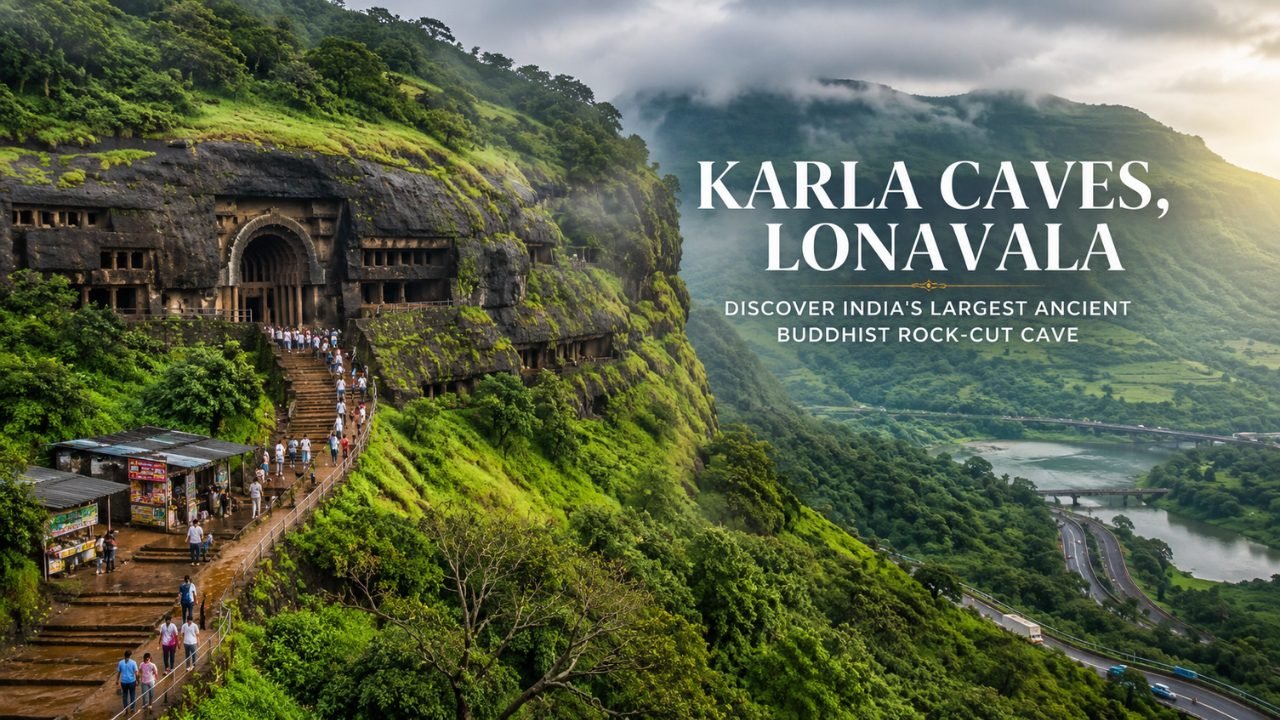
Have you ever wanted to step inside a time machine and witness what life looked like over 2,000 years ago? You don’t have to look too far. Tucked away beautifully in the misty Sahyadri hills of Karla Maharashtra, a spectacular ancient marvel waits to be explored. Officially known as the Karla Caves, this historic complex represents one of the oldest, largest, and most stunning examples of Buddhist rock-cut architecture in the entire country.
Most people pack their bags for a standard hill getaway to enjoy the weather, but the real magic of the Western Ghats lies hidden inside these monolithic rock faces. Whether you are a history buff wanting to decode ancient Brahmi inscriptions, a spiritual traveller visiting the sacred Ekvira Devi shrine, or an adventure lover excited to scale the hillside steps, Karla Caves should be right at the top of your travel itinerary. Let’s dive straight into all the practical details, entry tickets, and historical legends you need to know to plan an unforgettable trip.
Where Exactly Are the Karla Caves Located?
If you are trying to map out your transit route, the Karla Caves Lonavala Complex sits right off the old Mumbai-Pune Highway (NH 48) near a quiet settlement called Karli. Geographically, it is perched nearly 100 meters high on a scenic spur overlooking the green Indrayani River Valley.
To help you calculate your travel time and organise your day seamlessly, here is a quick breakdown of the distances from key central points:
- From Lonavala Town Centre: The total Karla Lonavala driving route is roughly 11 kilometres, which takes about 20 to 25 minutes via local transport or a private cab.
- From Lonavala Railway Station: It is a convenient 11-kilometre journey. You can easily spot local auto-rickshaws outside the station, willing to take you to the base village.
- From Pune City: The complex is located roughly 60 kilometres away, making it a highly popular one-day road trip destination.
- From Mumbai City: Around 95-100 kms via Mumbai-Pune Motorway.
These historic structures are so close to the main highways that they are among the easiest caves to access around Lonavala for family vacationers and solo backpackers alike.
The Timeless Legend: Karla Caves History
To really appreciate the architectural brilliance of this place, you have to look at the history of the Karla Caves. These rock-cut sanctuaries were excavated as early as 2nd Century BCE under the patronage of ancient Satavahana dynasty and rich traders. Karla Hill was situated on an important historic trade route linking the ports of the Arabian Sea with the Deccan plains. Buddhist monks selected this high mountain cliff for the construction of a giant monastic sanctuary.
The complex is structurally known as Karla Leni. It was a lively hub where travelling merchants, monks and students could rest, meditate and study during the heavy monsoon months. The site has 16 complex rock chambers – a large community prayer hall (Chaitya) and various monastic living spaces (Viharas).
Interestingly, history took a colourful twist just outside the main cave entrance. Centuries later, the local Koli (fisherman) community built the highly revered Ekvira Devi Temple right on the complex grounds. Today, the hill echoes with a unique spiritual mix of ancient Buddhist chants and vibrant Hindu devotional folk songs!
Exploring the Main Architecture: What to See Inside
When you finish climbing up to the main terrace platform, you’ll find that the real-life views easily surpass any Karla Caves images you’ve scrolled through online. Here is a checklist of the key structural elements you should observe closely:
The Grand Chaitya Hall (Cave No. 8)
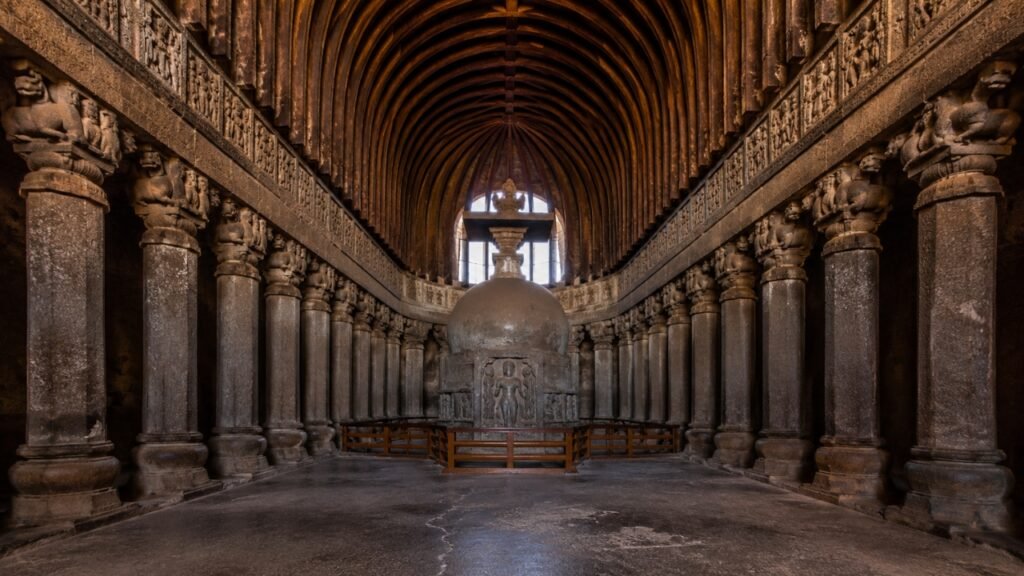
This is the undisputed crown jewel of the Karla Caves. Measuring a massive 45 meters long and over 14 meters high, it is officially the largest rock-cut Buddhist prayer hall in India. As you walk inside, look up at the ceiling, it features actual ancient wooden rib beams that have somehow survived intact for over two millennia without rotting!
The Symbolic Stupa and Pillars
At the far end of the grand hall stands a magnificent stone stupa underneath a carved wooden umbrella. The central aisle is flanked by 37 monumental octagonal pillars. The capitals of these pillars are beautifully decorated with realistic, intricate sculptures of kneeling elephants, horses and couples with historic metal ornaments.
The Ashoka Pillar
Right outside the main facade stands an imposing, free-standing stone pillar topped with four lions, heavily resembling the famous Lion Capital of Ashoka. It serves as a historic marker of royal patronage and ancient spiritual authority.
Pro-Tip for Travellers Road-Tripping Through Maharashtra

If you are planning a comprehensive weekend road trip to explore the best Lonavala caves and trekking forts, continuous driving can quickly tire you out. To experience an incredible, refreshing luxury getaway without breaking your budget, plan a relaxing stay at Shivjot Farms & Resort.
Did you know we have a fabulous, high-end property down in the peaceful valleys of Karjat too? If you want to experience a peaceful retreat on the farm, amidst nature, check out our upscale luxury lodgings at Shivjot Farms & Resort, Karjat. Stop at our beautiful resort property and relax by the outdoor swimming pool, enjoy absolute peace and recharge your energy before you head up the steep stone stairs of the ancient hills.
Ticket Prices, Timings, and Practical Details
To ensure you don’t run into unexpected logistical delays at the ticket counter, keep these updated visitor details in mind:
- Karla Caves Timings: The gates open daily from 9:00 AM to 5:00 PM. It is highly recommended to reach by 8:30 AM or 9:00 AM on weekends to explore the main halls before large tourist buses arrive.
Entry Ticket Fee:
- For Indian Citizens: ₹25 per person
- For Foreign Nationals: ₹300 per person
- Children (Below 15 Years): Completely Free
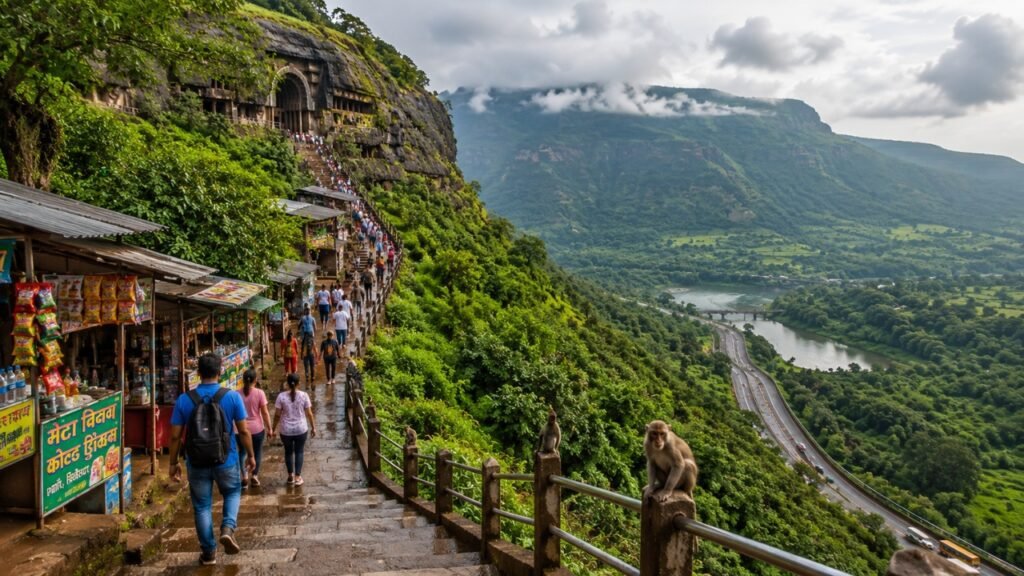
The Steps Challenge: To reach the actual cave entrances from the base parking area, you will need to climb a flight of roughly 300 to 350 stone steps. The path is well-paved and lined with small refreshment stalls selling lemon juice and snacks, but it takes about 20 minutes of steady walking.
Best Time to Plan Your Hill Visit
The seasonal weather changes the entire aesthetic of the valley completely. Pick your months based on your travel style:
| Season | Best Months | What the Experience is Like |
| Monsoon Magic | June to September | The hills turn incredibly green, and the karla road line fills up with cascading waterfalls. However, the stone stairs can get quite slippery, so wear shoes with excellent grip. |
| Pleasant Winter | October to February | This is hands-down the best time for historical exploration. The weather is cool and breezy, making the uphill walk comfortable for families. |
| Summer Peak | March to May | The afternoons can get hot and dry. If you are traveling during these months, try to wrap up your cave tour before 11:00 AM. |
Local Guidelines for First-Time Visitors
- Wear Proper Footwear: Ditch the slippers and flip-flops. The historical stone steps are uneven, and wearing sturdy sports shoes or trekking sneakers will make the climb much easier.
- Beware of Monkeys: Lots of playful Rhesus monkeys live on the steps leading up to Karla Road. Keep your sunglasses, cameras and plastic food bags zipped safely inside your backpack.
- Respect the Shrines: The historic site is adjacent to Ekvira Devi Temple, so do remember to dress appropriately and take off your footwear at places where local signboards ask you to.
- Combine Your Itinerary: Don’t stop at just one spot! Since you are already in the area, you can easily club your trip with a visit to the nearby Bhaja Caves, which are located just 8 kilometres away, or plan a light afternoon trek to the majestic Lohagad Fort.
Conclusion
Karla Caves is not just another basic sightseeing place, it is a living monument to human craftsmanship, patience and ancient spiritual dedication. To stand in a huge hall, hewn out of a single block of mountain, with only primitive chisels and hammers, is bound to leave you quite awestruck.
So pack your cameras, gather your friends and family and get ready to experience the incredible ancient heritage of Maharashtra!
FAQs
1. What are the operating hours for the Karla Caves?
The historical site is managed by the Archaeological Survey of India (ASI) and is open for tourists daily from 9:00 AM to 5:00 PM throughout the year.
2. How difficult is the walk up to the caves?
You need to climb roughly 300 to 350 stone steps from the lower vehicle parking area. It takes about 15 to 25 minutes of continuous uphill walking. There are plenty of little rest stalls on the way but if you are an elderly citizen with knee issues, it could be a bit hard.
3. What is the entry fee for Indian tourists?
The standard entry ticket for an adult Indian citizen is ₹25. Entry is completely free for children below the age of 15.
4 . Are there any other big caves near Lonavala to visit?
Yes! The Bhaja Caves are easily approachable and are about 8 kms across the valley. Bedse Caves is another great option, a short drive away and less crowded.
5. Can we find premium resorts to stay near the Lonavala-Karjat belt?
Absolutely! If you are road-tripping through the region, you can break your journey and experience top-tier luxury at a premium property like Shivjot Farms & Resort. For a peaceful valley retreat closer to nature, you can check out their amazing private villas at Shivjot Farms & Resort Karjat.